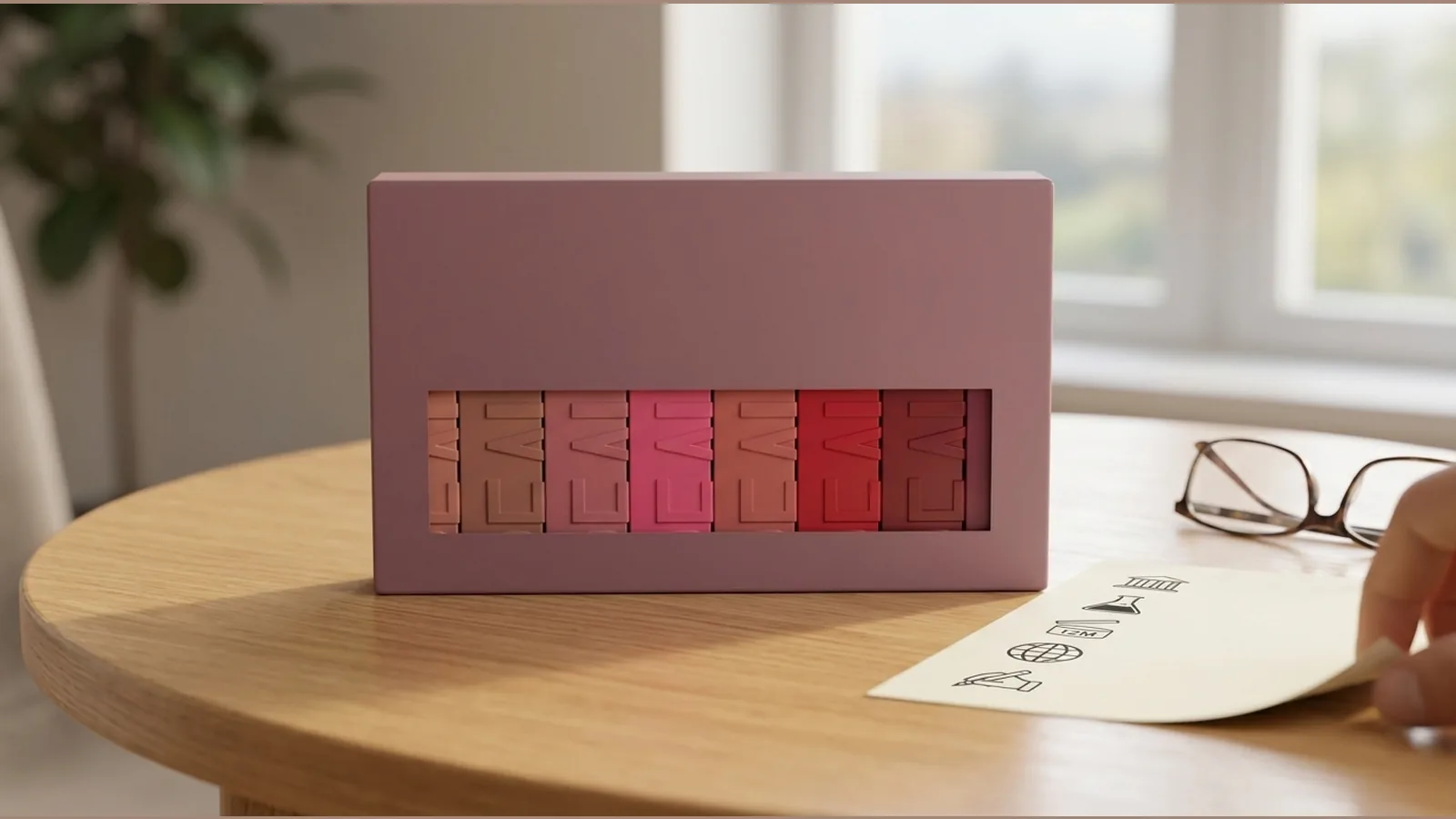
imported lipstick label UK checklist
An imported lipstick label UK checklist helps you confirm that packaging shows the legal information GB buyers should expect before purchase: a UK-established Responsible Person and address, ingredients, quantity, batch identification, durability details and any required precautions. Use the label and paperwork as your primary evidence, and treat marketing claims as unverified until those details are present.
Why the label matters
For cosmetics made available to consumers in Great Britain, labelling is part of the compliance framework, not a decorative afterthought. Official guidance expects products to be backed by a Responsible Person, safety documentation, notification and specified labelling information. Checking the pack before you buy is a practical way to spot missing legal particulars early.
If a listing emphasises shade sets, finish or marketing language but the label fields are incomplete, treat that as a buying signal to pause and ask for clearer product information.
Responsible Person and address
GB guidance requires a Responsible Person established in the United Kingdom, with contact details that consumers can use. On packaging, look for the Responsible Person name and address rather than only a brand logo or overseas seller name.
If the pack or accompanying documents do not identify a UK-established Responsible Person, you do not yet have public evidence that Great Britain market duties have been arranged for that product. Ask the seller for the Responsible Person details before you rely on the listing.
Country of origin
Country-of-origin wording on packaging can help you understand where the product was manufactured, but it does not replace Responsible Person, notification or safety documentation requirements for Great Britain. Treat origin statements as identity information only.
Do not assume that an imported lipstick is ready for GB retail use solely because origin, brand name or foreign licence numbers appear on a product page. Those details are not substitutes for UK Responsible Person, safety assessment and notification evidence.
Ingredients and precautions
Consumer cosmetic packaging should display the ingredients list and any necessary precautions for use. For imported lipstick, check that the INCI-style ingredient listing is actually on the product or outer pack you will receive, not only alluded to in marketplace text.
If no complete ingredient list is available, do not infer pigments, allergens, fragrance status or “free-from” claims from colour swatches or promotional images. Where you have a known sensitivity, seek appropriate healthcare advice before use; patch-testing and suspected reactions are clinical matters, not something a product page can settle.
Quantity, batch and durability
GB labelling expectations include nominal quantity, batch identification and durability information. On a multi-piece lipstick set, confirm both the number of units and the quantity marking on each tube or the outer pack.
For the DUNUF eight-piece matte liquid lipstick set discussed on this site, the controlled baseline is eight tubes labelled #01 to #08, each labelled 6 g, giving a controlled arithmetic total of 48 g expressed as 8 × 6 g. That arithmetic total is nominal content only; it is not a verified gross weight, and conflicting pack weights should not be treated as “measured” figures.
If batch coding or durability particulars are missing from the pack you inspect, ask for them before purchase. Use confirmed details period-after-opening, shelf-life or batch data from marketing photographs.
Red flags and next steps
Pause the purchase if any of the following are absent or unclear:
- UK-established Responsible Person name and address
- Full ingredients list on the product or outer packaging
- Nominal quantity marking that matches the units you are buying
- Batch identification and durability information
- Any precautions that the seller says apply to use
Also treat these as red flags: claims that a production licence or brand-authorisation screenshot equals GB cosmetic compliance; conflicting weight or dimension statements presented as “tested” results; and skin-type claims expanded beyond what the label supports. Next steps are simple—request missing label copy, Responsible Person details and any safety or notification references the seller can provide, then compare them with what arrives on the physical pack.
Soft live-detail check
Before you decide, open the current product details for the DUNUF eight-piece matte liquid lipstick set and use this short check:
- Confirm the offer is an eight-piece set with tubes shown as #01 to #08.
- Confirm quantity marking supports 6 g per tube and the 8 × 6 g total of 48 g, without treating conflicting pack weights as verified measurements.
- Look for ingredients, Responsible Person, batch and durability particulars; if they are not shown, ask for them rather than assuming compliance.
- Note that this site’s public warranty position for products it sells is 12 months; start date, exclusions, returns process and related claim limits are separate details to confirm at purchase if you need them.
When you are ready to review the live listing against this checklist, use the DUNUF eight-piece matte liquid lipstick set product page.
FAQ
Is an imported lipstick automatically legal to sell or use in Great Britain if it has a foreign label?
No. Great Britain expectations still centre on a UK-established Responsible Person, safety documentation, notification and the specified labelling particulars. A foreign label alone is not enough.
What should I look for first on lipstick packaging?
Start with Responsible Person and address, ingredients, quantity, batch identification, durability information and any required precautions. Those fields align with official consumer-cosmetics labelling points.
Can I rely on shade numbers instead of an ingredients list?
No. Shade numbers such as #01 to #08 identify the illustrated set combination only. They do not replace ingredients, allergen disclosure or other labelling duties.
What if the listing and the pack disagree on weight or dimensions?
Treat unresolved conflicts as unresolved. Do not publish or rely on a single “tested” weight or height when sources disagree; ask for clarified pack data before you buy.